
Why is Kitchen Floor Wet? Uncover the Surprising Reasons!

Have you ever walked into your kitchen and suddenly realized that the floor is wet? It can be quite frustrating and concerning, especially if you have no idea where the water is coming from. In this blog post, we will explore some of the common reasons why your kitchen floor may be wet and how to address the issue.
1. Leaky Pipes
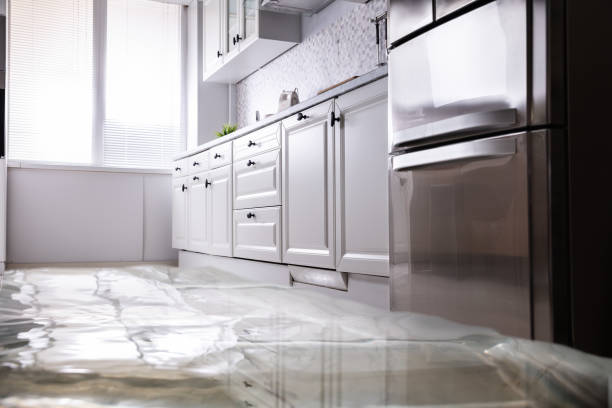
One of the most common causes of a wet kitchen floor is a leaky pipe. The plumbing system in your kitchen carries water to various fixtures, such as the sink, dishwasher, and refrigerator. Over time, pipes can develop cracks or become loose, causing water to leak onto the floor. It’s important to check the area under your sink and behind appliances for any signs of water damage or dripping pipes. If you notice a leak, it’s recommended to contact a plumber to fix the issue.
Credit: www.istockphoto.com
2. Refrigerator Issues
Another potential source of water on your kitchen floor is your refrigerator. Some refrigerators have a built-in ice maker and water dispenser, which require a water supply line. If the water supply line becomes damaged or disconnected, water can leak onto the floor. Additionally, a faulty defrost drain in the refrigerator can also cause water to accumulate and overflow onto the floor. If you suspect an issue with your refrigerator, consult the manufacturer’s manual or contact a professional appliance repair service.
3. Dishwasher Problems
Your dishwasher is another appliance that can contribute to a wet kitchen floor. If the dishwasher door is not properly sealed or the gasket is worn out, water can leak out during the wash cycle. Additionally, a clogged drain hose or a malfunctioning pump can also cause water to overflow onto the floor. Regularly inspect and clean your dishwasher, paying attention to the door seal and drain hose, to prevent potential leaks.
4. Spills and Splashes
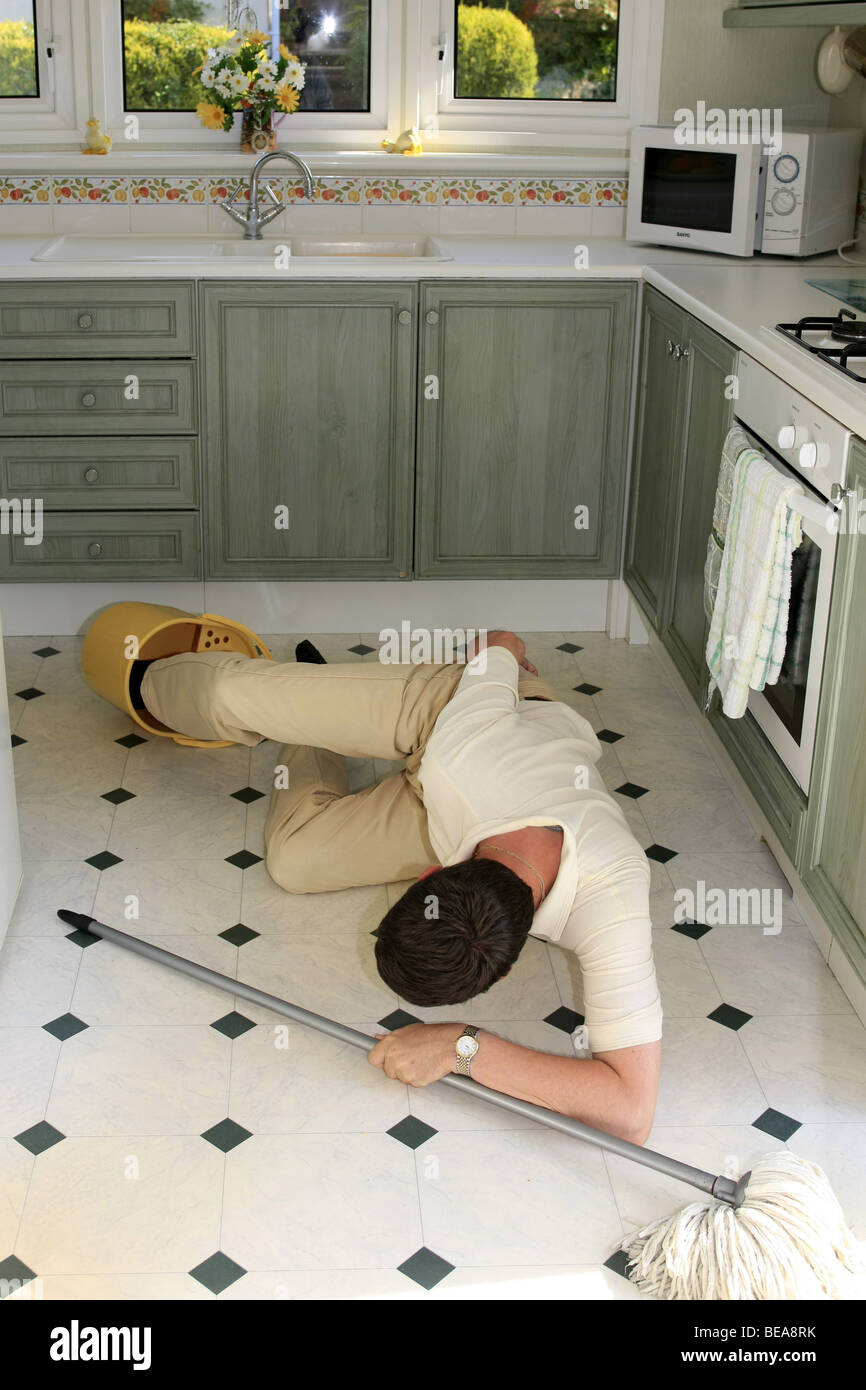
While it may seem obvious, spills and splashes are often the simplest explanation for a wet kitchen floor. Cooking can be a messy process, and liquids can easily be spilled or splashed onto the floor. Whether it’s water from washing vegetables or a spilled glass of juice, it’s important to clean up any spills promptly to prevent slips and falls. Investing in a good quality kitchen mat or rug can also help absorb any accidental spills and keep your floor dry.
5. Condensation
Condensation can also contribute to a wet kitchen floor, especially in humid environments. When warm air comes into contact with a cold surface, such as the floor, it can cause moisture to accumulate. This is commonly observed in kitchens with tile or stone flooring, as these materials tend to be cooler. To minimize condensation, ensure proper ventilation in your kitchen, use exhaust fans while cooking, and consider using a dehumidifier to reduce humidity levels.
Credit: www.alamy.com
6. Plumbing Issues
In some cases, a wet kitchen floor may be a symptom of a larger plumbing issue in your home. Issues such as a clogged drain or a backed-up sewer line can cause water to overflow and seep onto the floor. If you notice foul odors or slow drainage in multiple fixtures, it’s important to contact a professional plumber to assess and address the problem.
7. Flooring Problems
Lastly, the issue may not be related to any appliance or plumbing, but rather a problem with your kitchen flooring itself. Over time, wear and tear can cause cracks or gaps in your floor, allowing water to seep through. If you suspect this to be the case, carefully inspect your flooring for any signs of damage or deterioration. Depending on the severity of the issue, you may need to repair or replace the affected areas.
Frequently Asked Questions
Why Is My Kitchen Floor Wet?
A wet kitchen floor could be caused by a leaking pipe, appliance malfunction, or spillage.
How Can I Prevent My Kitchen Floor From Getting Wet?
Regularly check for leaks, wipe up spills immediately, and use rugs or mats in high-traffic areas.
What Should I Do If I Find My Kitchen Floor Wet?
Identify the source of the water, dry the floor thoroughly, and address any underlying issues promptly.
Is A Wet Kitchen Floor A Safety Hazard?
Yes, a wet floor can be slippery and increase the risk of accidents. It’s important to keep it dry.
Conclusion
A wet kitchen floor can be a nuisance and potentially indicate a more significant problem in your home. By understanding the common causes, such as leaky pipes, refrigerator issues, dishwasher problems, spills and splashes, condensation, plumbing issues, and flooring problems, you can take appropriate steps to address and resolve the issue. If you’re unable to identify the source of the water or if the problem persists, it’s always recommended to seek professional help to prevent further damage and ensure a safe and dry kitchen environment.


