
How to Clean Kitchen Floor: 5 Expert Tips for Sparkling Results

Keeping your kitchen floor clean is essential for maintaining a healthy and hygienic environment in your home. A clean kitchen floor not only enhances the overall appearance of your kitchen, but it also helps prevent the growth of bacteria and other harmful germs. In this ultimate guide, we will provide you with step-by-step instructions on how to effectively clean your kitchen floor.
Step 1: Sweep the Floor
The first step in cleaning your kitchen floor is to remove any loose dirt, dust, and debris. Grab a broom or a vacuum cleaner and sweep the entire floor surface. Make sure to reach into corners and under appliances to remove all the dirt.
Credit: www.ovenclean.com
Step 2: Choose the Right Cleaning Solution
Once the floor is free from loose dirt, it’s time to choose the right cleaning solution. The type of flooring you have will determine the best cleaning solution to use. Here are some common types of kitchen flooring and the suitable cleaning solutions:
| Kitchen Flooring | Recommended Cleaning Solution |
|---|---|
| Ceramic Tiles | Mild detergent mixed with warm water |
| Hardwood Floors | Wood floor cleaner approved by the manufacturer |
| Vinyl Floors | Vinyl floor cleaner or a mixture of vinegar and water |
| Stone Floors | Neutral pH stone cleaner |
Step 3: Prepare the Cleaning Solution
Once you have determined the appropriate cleaning solution for your kitchen floor, it’s time to prepare it. Follow the instructions on the cleaning product packaging to create the right mixture. If you are using a homemade solution, make sure to mix the ingredients in the correct proportions.
Step 4: Test the Cleaning Solution
Before applying the cleaning solution to the entire kitchen floor, it’s important to test it in a small, inconspicuous area. This will help ensure that the solution doesn’t damage or discolor your flooring. Apply a small amount of the solution and let it sit for a few minutes. Then, wipe it off with a clean cloth and inspect the area for any adverse effects.
:max_bytes(150000):strip_icc()/mopping-kitchen-floor-getty-0421-2000-46d7be1f03744559ad0aa298997a0a52.jpg)
Credit: www.marthastewart.com
Step 5: Mop the Floor
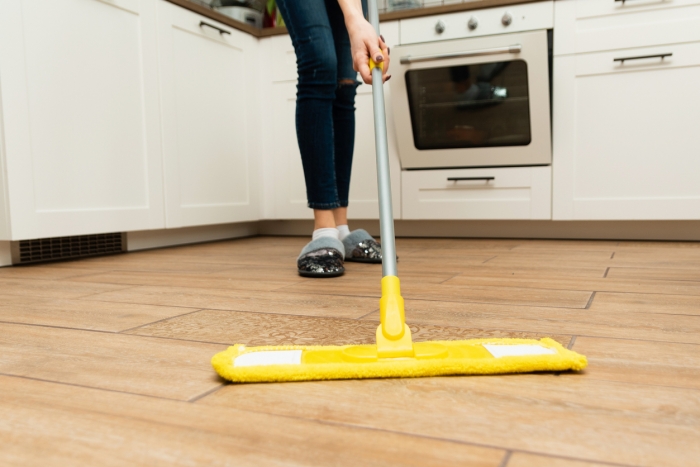
Now that you have prepared and tested the cleaning solution, it’s time to mop the kitchen floor. Dip a clean mop into the solution, wring out any excess liquid, and start mopping. Work in small sections, moving in a back-and-forth motion. Make sure to reach into corners and along baseboards. If you encounter tough stains or grime, apply a bit of extra pressure to remove them.
Step 6: Rinse the Floor
After mopping the entire kitchen floor, it’s important to rinse away any residue from the cleaning solution. Fill a bucket with clean water and use a clean mop or cloth to rinse the floor. Make sure to remove all traces of the cleaning solution, as any residue left behind can make the floor slippery or attract dirt.
Step 7: Dry the Floor
Once you have rinsed the floor, it’s time to dry it thoroughly. Use a clean, dry mop or towel to remove any excess moisture. Make sure the floor is completely dry to prevent any accidents or water damage to your flooring.
Step 8: Maintain Regular Cleaning
Now that your kitchen floor is clean, it’s important to maintain its cleanliness on a regular basis. Sweep or vacuum the floor daily to remove loose dirt and debris. Wipe up any spills or stains immediately to prevent them from setting in. Regular maintenance will make the cleaning process easier and keep your kitchen floor looking its best.
Frequently Asked Questions
How Often Should I Clean My Kitchen Floor?
Regularly sweep and mop to prevent dirt buildup and maintain cleanliness.
What Cleaning Products Should I Use For My Kitchen Floor?
Use mild detergent, vinegar solution, or specialized floor cleaners suitable for your floor type.
How Do I Remove Stubborn Stains From My Kitchen Floor?
Apply a paste of baking soda and water, let it sit, then scrub with a soft brush.
Can I Use A Steam Mop To Clean My Kitchen Floor?
Yes, but ensure your floor material is suitable for steam cleaning to avoid damage.
Conclusion
Cleaning your kitchen floor doesn’t have to be a daunting task. By following these step-by-step instructions, you can effectively clean your kitchen floor and maintain a hygienic environment in your home. Remember to choose the right cleaning solution, test it in a small area, and rinse and dry the floor thoroughly. With regular maintenance, your kitchen floor will stay clean and beautiful for years to come.


