
How Clean Kitchen Floor: Ultimate Guide for Sparkling Results

Having a clean and sanitary kitchen is essential for maintaining a healthy and inviting home. One of the key areas that require regular cleaning is the kitchen floor. With daily foot traffic, spills, and food particles, it’s no wonder that kitchen floors can quickly become dirty and grimy. In this blog post, we will provide you with a step-by-step guide on how to clean your kitchen floor effectively.
Step 1: Sweep or Vacuum
The first step in cleaning your kitchen floor is to remove any loose debris, such as crumbs, dirt, or pet hair. You can either sweep the floor using a broom or use a vacuum cleaner with a floor attachment. Pay close attention to corners and hard-to-reach areas where dirt tends to accumulate.
Step 2: Choose the Right Cleaning Solution
Next, you’ll need to select the appropriate cleaning solution for your kitchen floor. The type of flooring you have will determine the best cleaning product to use. For example, if you have tile or linoleum flooring, a mild all-purpose cleaner or a mixture of warm water and vinegar can work well. For hardwood floors, it’s important to use a cleaner specifically designed for wood surfaces to avoid damage.
Credit: www.ovenclean.com
Step 3: Prepare the Cleaning Solution
Once you’ve chosen the right cleaning solution, it’s time to prepare it. Follow the instructions on the product label or mix the appropriate amount of cleaner with warm water in a bucket. Be sure to wear gloves if necessary and ensure good ventilation in the kitchen while working with cleaning chemicals.
Step 4: Mop the Floor
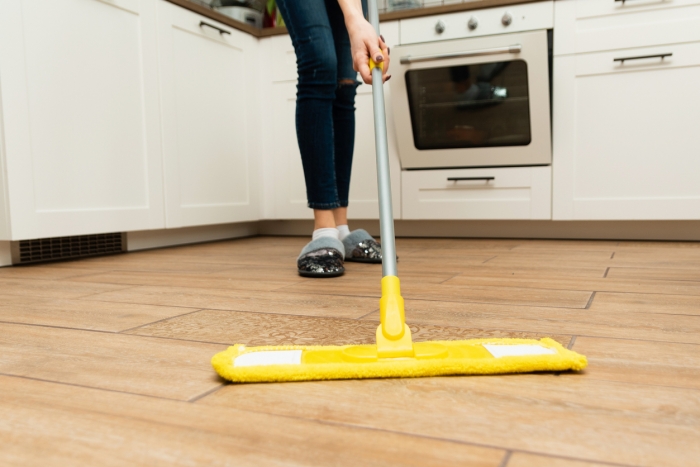
Now that your cleaning solution is ready, it’s time to mop the floor. Dip a mop or a microfiber cloth into the cleaning solution and wring out any excess liquid. Start mopping from one end of the kitchen and work your way towards the other end, making sure to cover the entire floor surface. Pay extra attention to any stubborn stains or sticky spots.
For large kitchens, you may need to change the mop water halfway through the process to ensure effective cleaning. Additionally, if your kitchen floor has grout lines, consider using a small brush or an old toothbrush to scrub the grout and remove any dirt or grime.
Step 5: Rinse the Floor
After you’ve mopped the entire floor, it’s important to rinse away any leftover cleaning solution. Fill a bucket with clean water and use a clean mop or cloth to rinse the floor thoroughly. This step is crucial to remove any residue that may be left behind and to prevent a sticky or slippery surface.
:max_bytes(150000):strip_icc()/mopping-kitchen-floor-getty-0421-2000-46d7be1f03744559ad0aa298997a0a52.jpg)
Credit: www.marthastewart.com
Step 6: Dry the Floor
Lastly, you’ll want to dry the kitchen floor to prevent any potential accidents or slips. Use a clean, dry mop or cloth to absorb any remaining moisture on the surface. Open windows or use fans to improve air circulation and aid in the drying process.
Additional Tips and Considerations
Here are a few additional tips to help you maintain a clean kitchen floor:
- Wipe up spills immediately to prevent stains and sticky residue.
- Place doormats at entryways to reduce the amount of dirt and debris brought into the kitchen.
- Regularly sweep or vacuum the kitchen floor to prevent the buildup of dirt and dust.
- Consider using a steam mop for deep cleaning your kitchen floor. Steam can effectively sanitize and remove stubborn grime.
- For hardwood floors, avoid using excessive water as it can cause damage. Instead, opt for a damp mop or specialized wood floor cleaner.
By following these steps and incorporating these tips into your cleaning routine, you can keep your kitchen floor looking its best and ensure a hygienic environment for you and your family.
Frequently Asked Questions
How Often Should I Clean My Kitchen Floor?
It’s best to clean your kitchen floor at least once a week to maintain cleanliness and hygiene.
What Is The Best Way To Clean A Kitchen Floor?
Start by sweeping or vacuuming the floor, then use a mop with a gentle cleaner and warm water for effective cleaning.
Can I Use Bleach To Clean My Kitchen Floor?
Avoid using bleach as it can damage the floor surface and grout. Opt for a mild cleaner recommended for your floor type.
What Are Some Natural Solutions For Cleaning Kitchen Floors?
Vinegar and water solution or a mixture of baking soda and warm water can be effective natural cleaners for kitchen floors.


