
What Happens When Cooking Oil Smokes: The Risks Unveiled

Have you ever noticed that moment when you’re cooking and suddenly the oil in the pan starts smoking? This is a common occurrence in the kitchen, but do you know what really happens when cooking oil reaches its smoking point?
Understanding Smoking Point
Cooking oils have what is known as a smoking point. This is the temperature at which the oil begins to break down and produce smoke. Different oils have different smoking points, depending on their composition.
When the oil in your pan reaches its smoking point, it starts to break down into its fundamental components. This breakdown can lead to the release of harmful compounds and the formation of free radicals, which are damaging to your health.

Credit: www.washingtonpost.com
Physical Changes
Visually, when cooking oil smokes, you will notice a change in its appearance. The oil may darken and become more viscous. The smoke produced is a clear indicator that the oil is undergoing chemical changes due to the high heat.
Release of Harmful Compounds
One of the dangers of letting cooking oil smoke is the release of harmful compounds into the air. These compounds can include acrolein, a substance known to irritate the eyes and respiratory tract. Breathing in these fumes can be harmful to your health.
Formation of Free Radicals
Another consequence of cooking oil reaching its smoking point is the formation of free radicals. Free radicals are unstable molecules that can cause oxidative stress in the body, leading to cell damage and potentially contributing to various health issues.
Impact on Flavor and Nutrients
Aside from the health implications, allowing cooking oil to smoke can also affect the flavor of your food. The burnt taste from the smoking oil can ruin the dish you are preparing. Additionally, the heat can also destroy some of the nutrients present in the oil.
Preventing Oil from Smoking
To prevent your cooking oil from smoking, it’s essential to be mindful of the heat you are using. Different oils have different smoke points, so using the right oil for the cooking method is crucial. Using oils with high smoke points for high-heat cooking can help prevent smoking.
It’s also important to monitor the temperature of the oil closely and adjust the heat as needed. Using a thermometer can be a handy tool to ensure you are cooking at the appropriate temperature and avoiding the oil from reaching its smoking point.
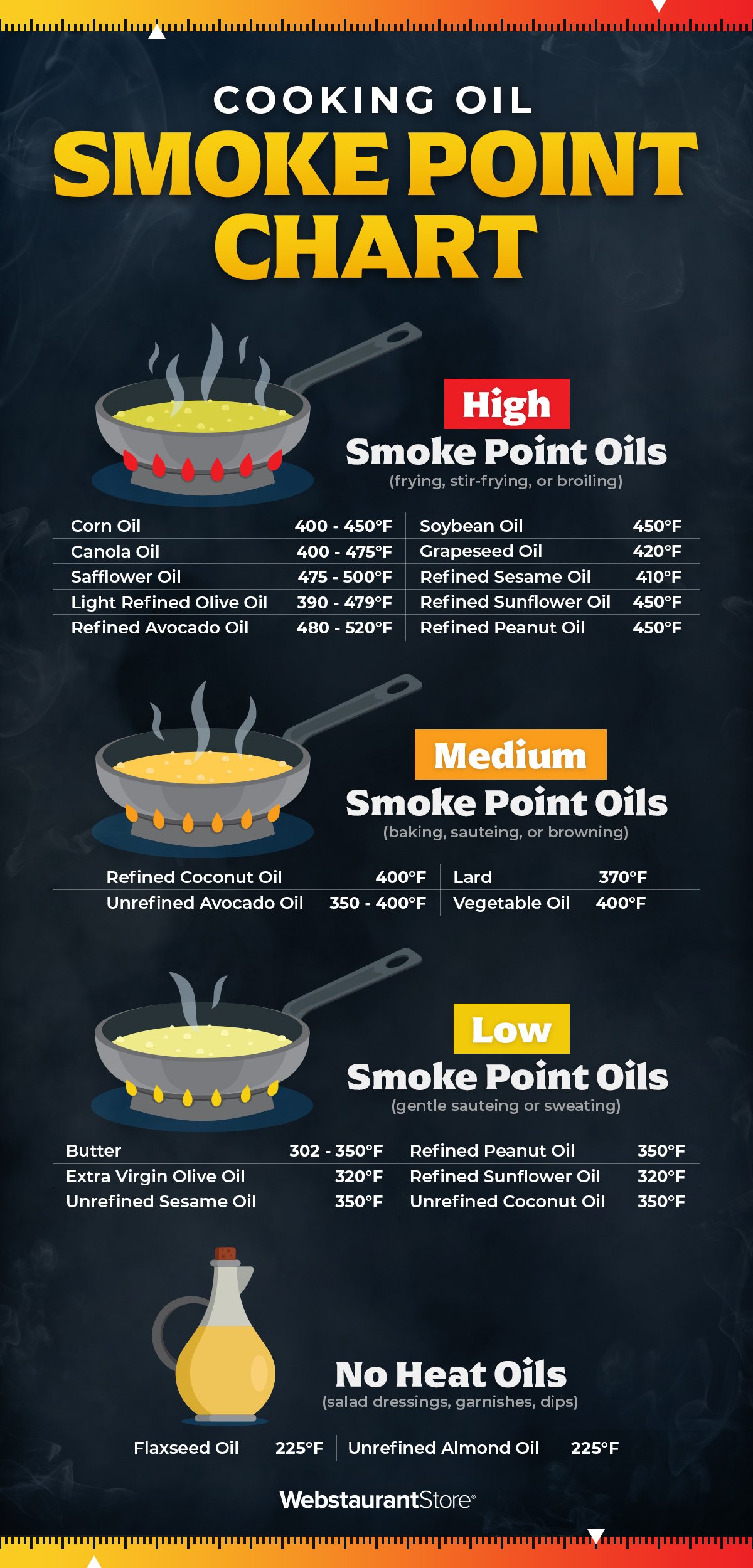
Credit: www.webstaurantstore.com
Healthy Cooking Practices
Adopting healthy cooking practices can help you avoid the risks associated with smoking oil. Opt for oils with high smoke points like avocado oil, coconut oil, or ghee for cooking at high temperatures. These oils are more stable and less likely to smoke.
Additionally, incorporating other cooking methods like steaming, baking, or sautéing can help you reduce the reliance on high-heat cooking methods that may lead to oil smoking.
Frequently Asked Questions
What Causes Cooking Oil To Smoke?
When cooking oil reaches its smoke point, it breaks down and releases smoke.
Is Smoking Cooking Oil Dangerous?
Yes, smoking cooking oil can produce harmful compounds and create a fire hazard.
How To Prevent Cooking Oil From Smoking?
Use oils with high smoke points, avoid overheating, and use proper ventilation.
Can Smoking Oil Affect The Taste Of Food?
Yes, smoking oil can impart a bitter and burnt flavor to the food.
What Should You Do If Cooking Oil Starts To Smoke?
Immediately turn off the heat, remove the pan from the stove, and let the oil cool.
Conclusion
In conclusion, when cooking oil smokes, it undergoes chemical changes that can release harmful compounds and free radicals into the air. It can also impact the flavor and nutrient content of your food. To prevent oil from smoking, choose oils with high smoke points and be mindful of the cooking temperature. By following healthy cooking practices, you can minimize the risks associated with smoking oil and enjoy delicious and nutritious meals.


